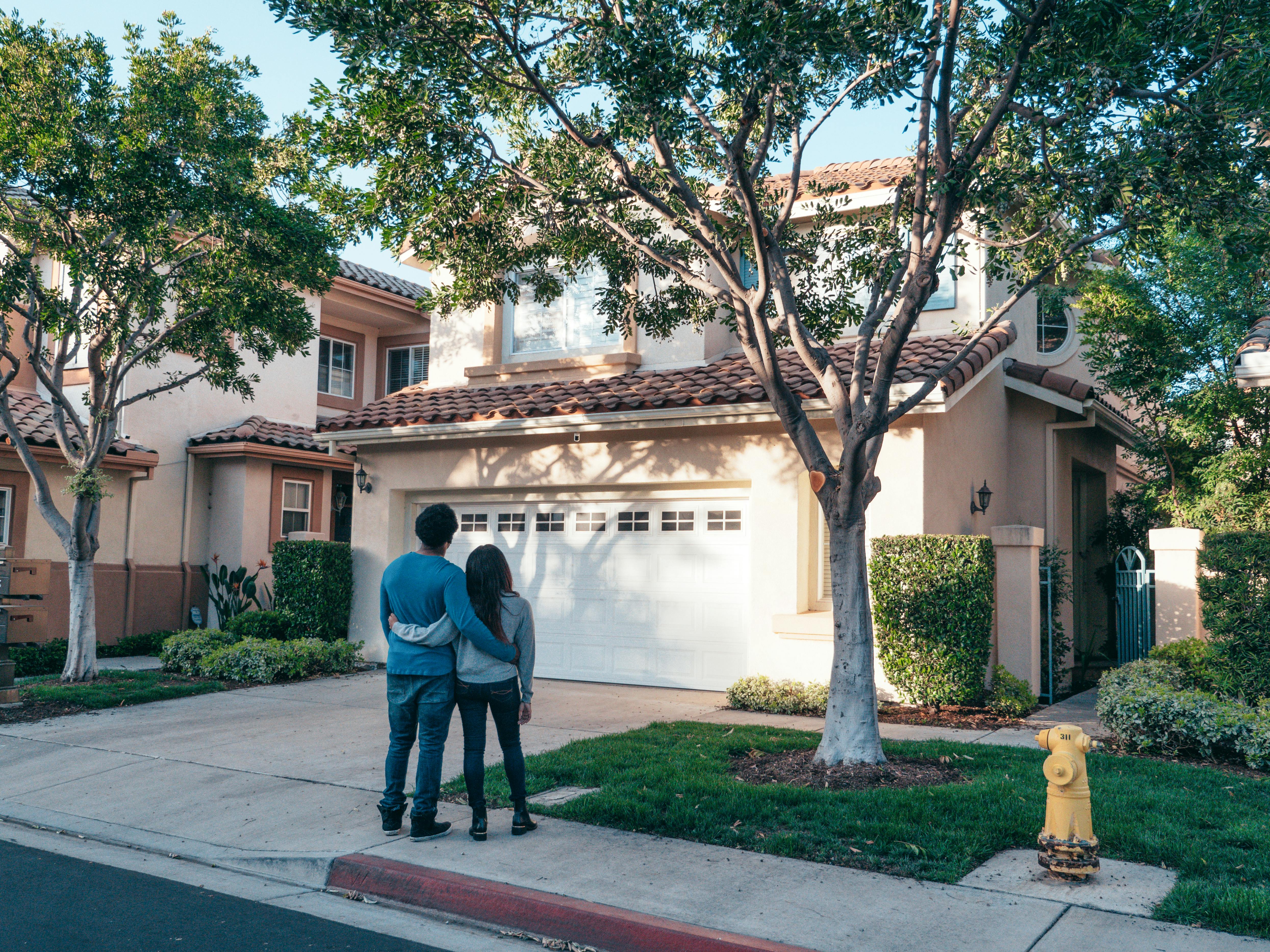
The very first reverse mortgage was written in order to help a widow stay in her home despite the loss of her husband’s income. In modern day, reverse mortgages still continue to help individuals stay in their home.
The definition of a reverse mortgage is simply a loan, and over the years it has continued to evolve into one of the safest mortgage products on the market today. Backed by federal insurance, thousands of seniors have already enjoyed the benefits of this financial tool.
Read on for more info on reverse mortgages, and learn how it can help you live a better life.
As you enter your golden years, you may find yourself thinking about your various options to supplement retirement income. After all, retirement symbolizes the end of standard work obligations, and one’s growing income is often replaced by a fixed income from sources like social security and pensions. And with as much as 50% of older Americans’ net worth tied up in home equity, you may become increasingly interested in learning more about what a reverse mortgage loan is and how to use it as a financial planning tool.
The Reverse Mortgage Meaning/Definition
The American Association of Retired Persons (AARP) defines a reverse mortgage as:
“A loan against your home that you do not have to pay back for as long as you live there.”
This is true only as long as you comply with the loan terms. For retirees who are “equity-rich” and prefer to age in the comfort of their homes, a reverse mortgage loan may be a viable solution that provides additional financial security.
Advantages and Features
There are a number of unique features associated with a reverse mortgage loan that have made it a popular option for seniors age 62 and over.
- It can help you turn a portion of the equity of your home into cash.
- A Home Equity Conversion Mortgage (HECM) reverse mortgage loan is backed by the Federal Housing Administration (FHA).
- Allows you to age in place — you do not have to move out of your home.
- No monthly mortgage payment—loan must be repaid when the last remaining borrower leaves the home or does not comply with the loan terms. Borrowers are responsible for paying property taxes, homeowner’s insurance, and for home maintenance.
- You continue to own your home, subject to a lien by the lender, the same as with any other mortgage.
- You cannot lose your home as long as you continue to:
- Stay current with your property taxes.
- Continue to pay your homeowners insurance.
- Comply with all loan terms.
How Reverse Mortgages Work
Reverse mortgage loans work by using the equity in your home and converting a portion of it into cash for you to use as you wish. These loans differ from other home equity loans because, with a traditional loan, you would typically repay the loan over time with a monthly mortgage payment. However, with a reverse mortgage, the loan is repaid all at once when the loan matures. Meanwhile, you continue to own and live in your home without a monthly mortgage payment. Borrowers are responsible for paying property taxes, homeowner’s insurance, and for home maintenance.
The loan becomes due and payable when a maturity event occurs. These events happen if the last remaining borrower:
- Sells or transfers the home.
- Passes away.
- Does not maintain the home with basic repairs.
- Fails to pay taxes, insurance, and other home obligations.
- Stops occupying the home as their primary residence or leaves the home for more than 12 consecutive months.
- Defaults under loan terms.
If any of these events happen, it is the borrowers’, or the estate’s, responsibility to repay the loan in full. To do this, the home is usually sold and proceeds from the sale repay the loan. Any leftover funds go directly to the borrower or their heirs. In the event that you or your heirs want to keep the home after a maturity event, you may repay the loan by using other funds or by refinancing it into a traditional mortgage.
Disbursement Options
Reverse mortgage loan funds can be paid in a variety of ways, according to the borrower’s preference. If you choose one type of disbursement then later realize that another type would be more fitting, you may change it through your servicer for a fee. But, to start, borrowers may choose to receive their funds in any of the following ways:
- A lump sum
When borrowers choose a lump sum disbursement, they receive their funds at closing. For added protection to the consumer, there is a withdrawal cap in the first year of the loan. This means that in the first twelve months, withdrawal is limited to 60% of the principal limit. If other required payments (such as an existing mortgage) take up more than 60% of the initial principal limit, you may take the amount needed plus an additional 10% of the principal.
- A line of credit
A popular disbursement option is the line of credit. The line of credit stays open and available to withdraw from at any time. Interest is charged only on the amount that is used. Borrowers should be aware however, that if the line of credit is fully paid-off, the account will close and the borrower will have to reapply for a new reverse mortgage loan to access the funds again.
- A monthly payment
With this option, your funds are disbursed in a fixed monthly payment that continues for the life of the loan or for a set amount of time. Typically, the monthly payment is determined based on your age, home value, and interest rate. It doesn’t change unless you request a payment plan change in writing.
- Or a combination of any of the above options
Borrowers can choose a combination such as a monthly payment with a line of credit, or a partial lump-sum with a monthly payment.
Reverse Mortgage Loan Uses
Reverse mortgage borrowers have used their funds in a multitude of ways. Other than a few restrictions such as limitations on using funds for estate planning service firms and certain annuities or insurance products, the loan proceeds could be used for anything you choose. The most common uses for reverse mortgage funds include:
- Paying off an existing mortgage (required as part of the loan)
- Reducing everyday bills
- Affording medical expenses or in-home care
- Repairing the home
- Setting it aside for potential emergencies
For borrowers with an existing mortgage, the reverse mortgage loan will first pay that off as part of the loan. If this applies to you, this may be one of the most valuable aspects of the loan. Since housing payments are normally about 30% of one’s income, relief from this expense may significantly increase your ability to save money every month and allocate it in ways that would improve your retirement lifestyle.
Credit card bills are also an expense that can take away a portion of income. Often, minimum payments tend to be comprised mostly of the card’s high interest rates, and the principal is hardly touched. Therefore, it can be difficult when these monthly minimum payments continue to take a portion of one’s income every month. Reverse mortgage funds can often reduce or pay off a credit card balance, freeing up income to be used for other expenses.
Financial planners are discovering that reverse mortgage loans can also be used as a strategic financial planning tool. Borrowers can use loan proceeds and defer drawing from social security so their benefits are larger at a later age. Alternatively, a reverse mortgage line of credit can be utilized instead of drawing from your investment accounts. This strategy allows funds more time to grow, or may be employed in times of economic downturns to allow investments time to recover. In both scenarios many seniors are finding that these strategies help them make retirement funds last longer. Speak with your advisor to learn more about these retirement strategies.
An additional strategic way to use reverse mortgage funds is to finance in-home care as opposed to moving into a nursing home. If you are like most seniors, you may feel more comfortable aging in the comfort of your home rather than in a facility. Fortunately, with a reverse mortgage, you can still do so even if you find that you need the care of a nurse.
Another important use of reverse mortgage funds is to cover medical expenses or health-related bills. If important medical procedures, medications, or diagnostic tests are needed, reverse mortgage funds can help you afford these expenses. Loan funds can help you make sure that your health is your highest priority, and not compromised due to financial pressures.
Types of Reverse Mortgages
Although 90% of all reverse mortgage loans in the United States are the government-insured Home Equity Conversion Mortgages (HECM), there are actually several types designed for different purposes. These include the following.
- HECM for Purchase
Used when you want to buy a new home and get a reverse mortgage at the same time.
- Reverse Mortgage Refinance
Used when you want to refinance an existing reverse mortgage.
- Single-Purpose Reverse Mortgage
Use if you only want to use reverse mortgage proceeds for one expense. These are smaller loans and generally less expensive.
- Proprietary Reverse Mortgage
Typically used for high-valued properties.
Reverse Mortgage Loan Safeguards
Understandably, financial safety is a concern for many consumers who are considering loans. Fortunately, with the HECM reverse mortgage, the U.S. Department of Housing And Urban Development (HUD) puts consumer safety as a top priority. HUD safeguards the loan product, and continuously adds protections for consumers as the borrowing climate changes. Such safeguards include:
- Limitations on Lender Fees
Origination fees are capped and regulated by the federal government.
- Reverse Mortgage Counseling
HUD requires that all prospective borrowers go through mandated counseling sessions with an unbiased third party FHA-approved counseling service before the loan application is submitted. The session will provide you with further reverse mortgage information as well as information on other possible financial options.
- Financial Assessment for Borrowers
Lenders perform a financial assessment to evaluate your ability to fulfill the loan obligations listed above, thus minimizing the possibility of default.
- FHA Reverse Mortgage Loan Insurance
You are protected from ever owing more than your home’s value. If your loan exceeds the value of the home, FHA insurance will pay the difference to the lender for you.
- Non-Recourse Loan Protection
The loan is secured by a lien on the home, but no assets other than the home may be used to repay the debt. This means your other assets are protected.
- No Pre-Payment Penalties
No additional costs will be incurred if you choose to repay your loan during the term. This applies to both partial and full payments.
Reverse mortgage loans have proven to be a valuable financial tool in retirement planning. When used intelligently, this loan is poised to provide you with a viable option in supplementing retirement income. To learn more about this versatile loan, speak to a licensed reverse mortgage professional at 1-888-998-3147.
Sources:
“Frequently Asked Questions about HUD’s Reverse Mortgages.” HUD.gov. U.S. Department of Housing and Urban Development. ND. Web. 31 August 2015. http://portal.hud.gov/hudportal/HUD?src=/program_offices/housing/sfh/hecm/rmtopten
“How Recent Changes in Reverse Mortgages Impact Older Homeowners.” AARP.org. AARP. ND. Web. 31 August 2015. http://assets.aarp.org/rgcenter/ppi/ltc/fs211-economic.pdf
Lim, Alberta. “Understanding 4 Key Reverse Mortgage Loan Features.” SeniorLiving.com. NP. ND. Web. 10 September 2015. https://www.seniorliving.com/article/understanding-4-key-reverse-mortgage-loan-features
“Mortgagee Letter 2014-22: HECM Financial Assessment and Property Charge Requirements.” HUD.gov. U.S. Department of Housing and Urban Development. 10 November 2014. Web. 31 August 2015. http://portal.hud.gov/hudportal/documents/huddoc?id=14-22ml.pdf
“Reverse Mortgage Loans: Borrowing Against Your Home.” AARP.com. AARP. ND. Web. 10 September 2015.
Comments
Post a Comment